


How to Spend 4 Days in Rome (First-Time Visitor’s Guide)
Updated: Apr 13
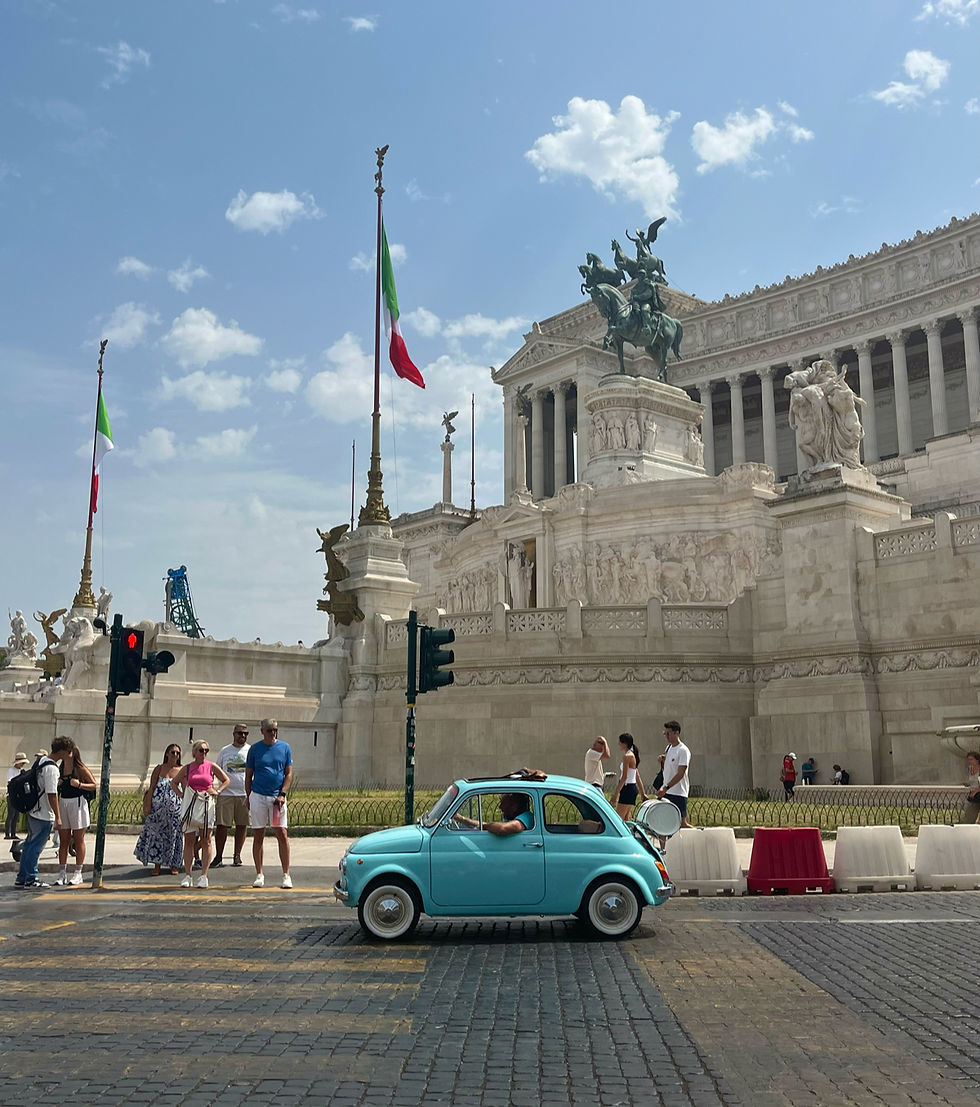
Rome, the Eternal City, is on many a bucket list - and it had been on mine for years. For some reason, I'd prioritised other places in Italy: Tuscany, Lake Como, Venice, the Dolomites... but Rome had fallen by the wayside. I figured it would always be there and just seemed like such an obvious place to go, that I'd somehow always given it a miss! This is ridiculous now that I've been there and knowing what I now know! I went in August 2025 for the first time and I was blown away; there is history at every turn - and such ancient history as well. It is the most beautiful city, perfectly walkable, with amazing food, architecture and views - and I can't believe I didn't go sooner. So this blog post is to convince you to put everything else on pause and book that flight! With a city like this, there is so much to see and do, and visiting Rome for the first time can feel overwhelming. So, following my recent visit, I've put together the ideal 4-day Rome itinerary, perfect for first-time visitors who want to see the highlights without feeling rushed. Lace up your most comfortable shoes (you'll need them) and let's get going!

Please note: This post contains affiliate links, which means I may earn a small commission if you book through them - at no extra cost to you. Thanks for supporting my blog!
When to visit
Ah yes, the big question. No doubt you'll have seen on social media how crowded Rome can get at peak times. I went in the height of summer (the final week of August) and besides from being packed with tourists, it was also absolutely boiling ☀️ If you can, I'd recommend going off-peak April-May, or Sep-Oct. You should still get the good weather, with less crowds. I've never been anywhere as busy in Rome in August, so I would 100% recommend visiting any other time of year instead 😅
Where to stay
I can honestly say I've never been as overloaded with accommodation options as I was when booking a place to stay in Rome. There are a plethora of places, with varying prices, and varying levels of modernness; lots of them are hotels, and some of them more like apartment hotels. Bearing in mind that you'll likely do a lot of walking in Rome, you may want to prioritise staying in a more central area so that you are near to some of the landmarks - which is what I did.
I stayed in BDB Rooms Navona. It's in an excellent location; three-minute walk from Piazza Navona, and seven minutes from the Pantheon! It doesn't have someone at reception all day - but there is a code on the main door and it felt really safe for a solo traveller.
Another nice option is Dimora Coppelle. It is in a great location and has a lovely terrace.
For something very high end, try Maalot Roma - it's in an excellent location and the rooms are really lovely.

Practical Tips for Your First Time in Rome
Getting to Rome from the Airport
I flew into FCO Airport - it's the largest airport in Italy and the main one in Rome for international flights. There's a certain thrill that comes from working out the public transport in a foreign country, especially when travelling solo! So I was determined to travel into Rome from the airport via public transport and not just jump in an Uber. It was super simple - I took the Leonardo Express train but read on below for all of the options:
🚌 By bus: Exit the airport, turn right and follow the 'Bus' signs, where you'll see the buses lined up. There are a few different bus companies; the ride is about 60 minutes and costs roughly €7 one-way. You can purchase tickets at the bus depot or in advance if you prefer. The bus will drop you off at Roma Termini (the train station in Rome), and you can then get a connecting bus to your hotel.
🚝 By train: This is what I did as it was the quickest option. Follow the signs to the 'Trains' as you exit and turn right out of the airport. You can purchase tickets in advance or at the kiosks in the airport. You can also buy a ticket in the train station itself, just before the platforms (which is what I did). The Leonardo Express train takes about 30 minutes to get to Rome and costs €14 one-way. The train will drop you off at Roma Termini (the train station in Rome), and you can then get a bus to your accommodation (which is what I did), or walk if it's nearby. For the bus, I just tapped my contactless card once on the bus.
*If you're staying in Trastevere, you can take the other train from the airport - Treno Regionale - for €8.
🚕 By car: You can get a taxi or Uber from the airport, roughly €50. A fixed fare taxi applies only within the Aurelian Walls. If you are staying outside of this area, the taxi will use the meter and this will be more expensive. So watch out!
Booking tickets for attractions and popular sites in Rome
Nothing kills the mood like standing in a two-hour queue 😅 Many of Rome's most famous attractions and landmarks, such as the Colosseum and Vatican Museums, get incredibly busy and tickets can sell out days (sometimes weeks) in advance. It's worthwhile to book entrance tickets to any of the big sites in advance online, regardless of if they are guided tours or just general admission, to save time queueing on the day and/or disappointment if your preferred time slot is sold out. I used the official websites of each site to book my tickets (and I've detailed these further down the blog) but if these are all sold out, there are other tour options in Rome. So not all is lost!

A note on guided tours:
With regard to deciding which tours to book, my thinking was that as nice as guided tours are, as they give you a proper understanding of a place, they can also be really tiring. For example, if you're doing a tour of the Colosseum, this typically includes the Roman Forum and Palatine Hill, and doing all three in one day, plus on a guided group tour, can be exhausting. So it's important to decide which places in Rome you want a guided tour of (if any) and prioritise the ones most valuable/important to you. This is just my opinion though, and if you have the energy to do multiple guided tours, go for it! You'll definitely learn a lot.
The only guided tour I booked was for the Vatican Museums. I knew I wanted a guided tour of the Vatican (as it's massive and overwhelming if you don't know where to go/what you're looking at). But the Colosseum/Roman Forum I thought I'd find okay to do by myself, as you can read the information onsite and/or look things up online (I still made sure to book my entrance ticket online in advance). I was very happy with my decisions; I would say though that the Roman Forum has less 'structure' to it/no information onsite, and you can find yourself wandering a bit; so either book a tour here, or read things up online before you go.
You can also do the Hop-on Hop-off Bus Tour; this allows you really get your bearings of where everything is in Rome, and it's a nice thing to do on your first or last day. It's good value for money and the pass allows you to use it for one day (the actual tour is 1.5 hours and incudes an audioguide).
Luggage storage
If you've arrived too early to check in to your accommodation, or if you decide to head straight to the attractions in Rome, you can store your luggage somewhere nearby. This is also handy on the last day before your flight; I had a late afternoon flight, and my accommodation didn't have a secure luggage storage option, so Radical Storage was a great option. They have cheap prices from as little as €3.90 per day, and are across at least 160 locations in Rome.
Rome Itinerary: How to See the Best of the Eternal City in 4 Days
Day 1
I arrived in the afternoon of Day 1, so after checking into my accommodation, I set off to explore the sites! I didn't have anything major planned - I just wanted to see some of the famous landmarks around the city before the sun set, in a good-walking order. I didn't go into any of these buildings on Day 1, I just walked past and saved the actual tours for other days when I had more time. I've listed these places below with some info about each one. If you have time, feel free to schedule in a proper visit on Day 1. Bear in mind that if you're doing these during a summer afternoon, each place is likely to be very very busy as the crowds really amass as the day goes on!
Piazza Navona

This place took me by surprise and I really loved it here! I wasn't expecting it to be such a large area; it's built on the site of the ancient Stadium of Domitian (1st century AD), which was used back in the day for athletic contests. In fact, you can still see the oval shape in the piazza's layout. The Renaissance and Baroque buildings in place here date back to the 16th and 17th centuries, so make sure to take these in as they are truly beautiful. The fountains are amazing to just sit and look at, and the people-watching is topnotch. Piazza Navona is one of Rome's prettiest and most lively squares - with street performers, artists and restaurants a'plenty.
Trevi Fountain

From Piazza Navona, I headed to... drumroll... the Trevi Fountain! It had to be done, especially as this was my first time in Rome 😁 I made sure to visit here earlier one morning as well, when there were less crowds - but I was keen to see it on my first day, to see what all the fuss is about, pay homage to Lizzie McGuire, and toss a coin over my shoulder. Tradition dictates that you should stand with your back to the fountain, hold a coin in your right hand, make a wish, and toss the coin over your left shoulder. Apparently it grants good luck and ensures a return to Rome!
The fountain was extremely busy, with queues to get to the front of it. So in order to avoid all this, go early in the morning before 9am (before the queuing system starts), or later in the evening. Entrance is free at any time of the day (minus the coin you chuck in 😉).
Day 2
Trevi Fountain (In the morning light)


I did a quick trip back to the Trevi Fountain early the next morning to see it with fewer crowds. As you can see above, the light is so different at varying times of the day. It's definitely brighter in the morning!

Spanish Steps
The Spanish Steps are one of Rome’s most iconic spots, and definitely worth a visit during your first time in the city. I’d really recommend approaching from Via dei Condotti towards Piazza di Spagna. That way, you’ll see the steps directly in front of you as you walk towards them, rising up in all their glory. I didn't do this and I was a little underwhelmed 😂 as I approached them from the side. Walking down Via dei Condotti towards the Steps is a much more impressive first impression, and something I realised when I passed them in this direction at a later time. If you can, come early in the morning or around sunset for a slightly quieter experience and a much nicer atmosphere. The Spanish Steps are a UNESCO world heritage site, and sitting, eating or drinking on them is strictly prohibited and you can be fined! Make sure you walk all the way to the top for excellent views from above.
Visiting the Colosseum (First-time tips + ticket guide)


One of the top things (if not the top thing) to do in Rome is a visit to the Colosseum, especially if it's your first time in Rome. It is a seriously impressive structure, and walking towards it for the first time, you really feel just how enormous it actually is. If you're following a 4 day Rome itinerary, this is an absolute must-see and worth booking in advance (make sure to read the paragraph further down on which ticket type to book).
Built between 72 and 80 AD under the emperors Vespasian and Titus, the Colosseum was Rome's statement of power, entertainment and a masterpiece of Roman engineering. Its system of arches and internal corridors made of concrete were essential in allowing thousands of people to enter, find their seats, and exit efficiently. As you walk around, it’s worth taking a moment to imagine just how advanced this structure was for its time.
What took place in the Colosseum was far darker; it was primarily used for public spectacles, most famously for gladiator fights, animal hunts and executions. Slaves, prisoners of war and criminals were used for these bloodthirsty theatrics, reinforcing Rome's message: the Roman empire ruled the world and its enemies became part of its entertainment. The Colosseum was funded by the spoils from the Temple of Jerusalem (a connection you can still see depicted on the Arch of Titus - more on that in the Roman Forum section), and many Jews were used as forced labourers in its construction, along with other monuments across Rome. Interesting fact: the Colosseum was originally called the Flavian Amphitheatre, after the ruling dynasty, while "Colosseum" came from a colossal statue of Emperor Nero that previously stood nearby. Despite its dark history, it remains one of the most iconic landmarks in the world and a highlight of any Rome itinerary.

It can be a bit confusing knowing which type of ticket to book, as there are multiple ticket options, and also deciding if you want to do a proper guided tour or just walk around by yourself. Fear not! I am here to help...
Tickets:
There are a lot of websites selling Colosseum tickets but I booked mine through the official site: https://ticketing.colosseo.it/en/ I'd only recommend using another site like Get Your Guide if the tickets are sold out on the official site.
There are several ticket options available, as you'll see on the website; I went for Individual – 24h Colosseum, Roman Forum, Palatine (€18). This gives you access to the first and second levels of the Colosseum (not the arena floor or underground levels - but you can see the arena floor clearly), the Roman Forum and Palatine Hill which is a beautiful outdoor area filled with Roman ruins, including the Arch of Titus. Up to 8 tickets can be booked through the Individual ticket option. This particular ticket allows you to visit all three sites within a 24-hour period. Meaning that you have to enter the Colosseum at your booked time slot - but for the Roman Forum and Palatine Hill, you can enter within the 24-hours before or after your Colosseum time slot. For example, you could explore the Colosseum first, grab lunch, and then head over to the Forum afterwards. Note: the Roman Forum and Palatine Hill are connected, so they must be visited together.
Guided tours:
If you prefer a guided experience, you can choose one of the options from the Educational Tours page on the website. If you're not sure if you want to be part of a guided tour all day, I'd recommend doing the Colosseum by yourself as this is well marked, and booking a guided tour for the Roman Forum as this has very little signage and it would be beneficial to know what you're looking at 😉
👟 Whichever ticket/s you purchase, make sure to wear comfortable shoes as you'll be doing a lot of walking. You'll also need to bring ID as they check this against the name on your ticket/s. Note: they will only let you enter the Colosseum at the exact entry time on your ticket; I was 15 minutes early and they turned me away.
Exploring the Roman Forum (What not to miss)

I didn't really have any preconceived ideas about the Roman Forum as I kind of turned up not knowing anything about it; after all, it was combined with my Colosseum ticket and I hadn't read much in advance of my trip. This place blew me away; it ended up being one of the biggest highlights of my first time in Rome. The Roman Forum is literally an open-air museum/time machine, with ruin after ruin stretching in every direction. If you’re following a 4 day Rome itinerary, don’t make the mistake of rushing this part. It’s absolutely worth taking your time here.
The Forum began developing in the 7th century BC and was a political, social and religious centre in the heart of Ancient Rome. It was then abandoned in the middle ages (becoming a pasture), until excavations in the late 19th and 20th centuries. While not everything has survived (some buildings were quarried for materials), what remains is still incredibly impressive.
If you're not joining a guided tour, make sure to look out for these highlights:
The Arch of Titus: You can't miss this as it's right at the entrance. This triumphal arch was built in 81 AD to commemorate the Roman victory over the Jews and the capture of Jerusalem in 70 AD. It was built to honour the Emperor Titus's victory and is one of the most significant monuments in the Forum (I've written a few bullet points lower down as to why it is so significant - so please have a read if you want to gain a bit of knowledge before your trip!).
Via Sacra: The "Sacred Road" the main road going through the Forum.
Temple of Saturn: The iconic columns, once home to Rome's national treasury. It was consecrated around 497 BC and is one of Rome's oldest sacred sites.


The significance of the Arch of Titus (good to read before you go):
It set the standard for victory monuments/arches across the Roman empire and inspired later arches, such as the Arch of Constantine (which you can see nearby) and the Arc de Triomphe in Paris.
The arch was a massive statement; it was placed on the Via Sacra - the main road through the Forum - meaning anyone living in Rome would constantly pass by it and be reminded of Rome's might and domination over Jerusalem.
The relief of soldiers carrying treasures from the Temple of Jerusalem, including the Menorah, is the only contemporary depiction we have of Temple objects, making the arch a rare and invaluable record.

After you've had a long wander around the Forum, head up Palatine Hill. The easiest way to get there is to head back to the Arch of Titus, and take the uphill path to the left (if facing the Colosseum). The views over the Roman Forum are just amazing - it's like looking at a model village. I’d recommend saving this until last, as it gives you a chance to look back over everything you’ve just explored and piece it all together.
Altare della Patria: Monument to Victor Emmanuel II
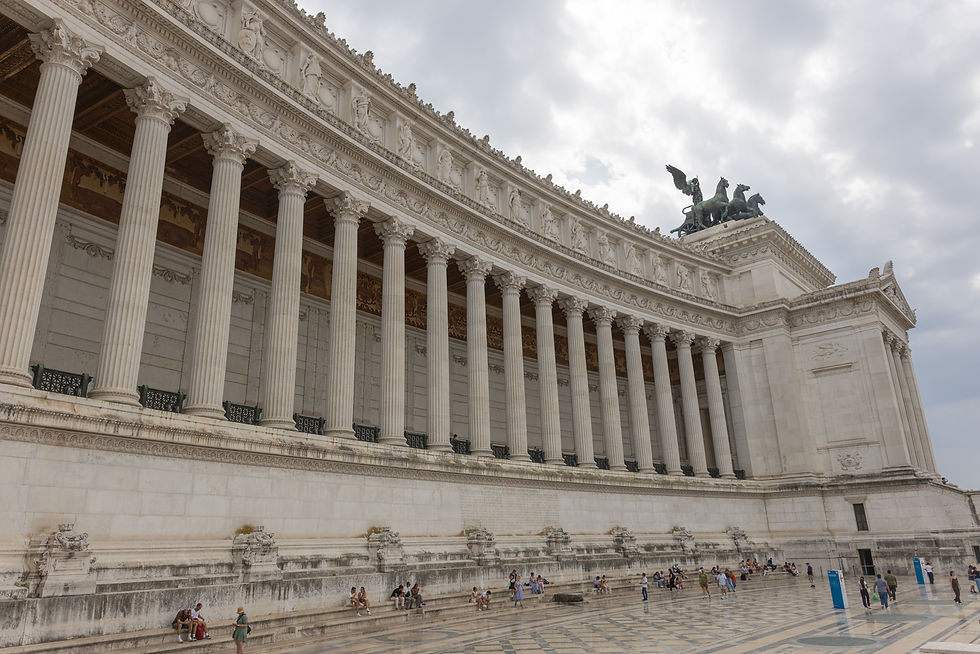
This 4 day itinerary for Rome covers all the main highlights - and for me, one of my absolute favourites was the Monument to Victor Emmanuel II, also known as the Vittoriano or Altare della Patria (Altar of the Fatherland). It is the most beautiful building, huge in stature and an exquisite piece of architecture. I'm not sure how but after the Roman Forum, I still had energy so I headed to Altare della Patria. It was built between 1885-1935 to honour Victor Emmanuel II who was the first king of a unified Italy. At the front of the monument, underneath the statue of the goddess Roma, is the Tomb of the Unknown Soldier - commemorating Italian soldiers who were killed or went missing during war. Above/behind this is the equestrian statue of Victor Emmanuel II; it is one of the largest statues in the world!

You can easily spend an hour walking around and taking in the views. I loved it so much - I visited twice! Entrance to the main monument is completely free; this lets you climb a couple flights of stairs for some sensational views of Rome. I did this on my first visit. When I visited the monument again on the last day of my trip, I paid the extra €18 for entrance to the top terrace. This gives you some additional viewpoints - but in all honesty, the lower floor has great views. I had extra time before I had to catch my plane home, so I bought the ticket but you could easily just stay on the main part of the monument.


The monument is open Monday to Sunday from 9.30am to 7.30pm (last entry 6.45pm). Changing of the guard takes place every hour. There is a cafe as well which is located on the terrace of the building's east side. It has amazing views of the Colosseum and the Roman Forum. The cafe can be accessed without tickets to the top terrace. Especially on a hot day, it's worth stopping here for a drink; the views really are incredible.

Aventine Keyhole
Yes this is still Day 2! I had some time before dinner, so decided to take an electric scooter over to peek through the Aventine Keyhole. I had seen the Aventine Keyhole mentioned in many a blog post as one of Rome's must see attractions. I'd purposefully not googled photos of the view, so as to keep it a surprise - so I won't include any photos here either. The Aventine Keyhole is one of Rome's most unique hidden gems, offering a perfectly framed view of St Peter's Basilica (the world's most renowned Roman Catholic church) in the Vatican City - but the origins of the keyhole remain a mystery. When you look through the small keyhole, you're actually looking across three countries at once - how cool is that! Malta (the garden is officially Maltese), Italy (the view is of Rome), and Vatican City (home to the basilica).
There is no charge to look through the Aventine Keyhole but there will most likely be a queue. As with everything in Rome, you're better off going early in the morning to avoid the crowds. I went about 4.30pm and had to queue for half an hour. It's a cool view but if you don't have time for it, I'd say just give it a miss.

Orange Garden (Giardino degli Aranci / Parco Savello)
If you’re at the Aventine Keyhole, the Orange Garden is right nearby. It’s a small but charming spot, known for its perfectly framed view over Rome, with the Tiber River winding through the city below. As the name suggests, the garden is filled with orange trees, which add to its charm. It’s especially popular at sunset, when the sky lights up behind the city.
I then headed back to my hotel and out again for dinner.
Day 3
Vatican City

Tucked into the heart of Rome, you’ll find Vatican City. If it’s your first time in Rome, this is an unmissable stop on any 4 day Rome itinerary. It may be small, but there’s so much to see and do; you can easily spend an entire day here! Highlights include the Vatican Museums (home to Michelangelo’s masterpiece on the ceiling of the Sistine Chapel), St Peter’s Basilica, and St Peter’s Square.
Getting to Vatican City from Rome
🚝 By Metro: The quickest way to get to Vatican City from central Rome is via Line A (Orange Line) to Ottaviano-San Pietro. It's about 15 minutes, followed by a 10-minute walk to St Peter's Square, and costs €1.50. 🚌 By bus: Take the 64 bus from Rome Termini to Cavalleggeri/S. Pietro. It takes about 30 minutes (longer in traffic), followed by a 10-minute walk to St Peter's Square, and costs €1.50.
🚶♂️By foot: This is what I did and it was really enjoyable. It takes around 35 minutes from the Pantheon/Trevi Fountain area, and is a lovely walk over the Tiber River.
🚕 Taxi/Uber: You could also get a taxi which takes about 20 minutes (depending on traffic), and costs around €15-€20.

It gets seriously busy in summer, so expect lots of shuffling through crowds, especially in the Vatican itself and also in the queue for St Peter's Basilica. If you’re planning a Rome itinerary for 4 days, I’d definitely recommend choosing earlier slots in the day, to make the most of your time in the city. Booking in advance for the Vatican is absolutely essential in high season. I didn't book for St Peter's Basilica as I wasn't sure how long I'd be in the Vatican. If you book in advance for the Basilica, you just go a bit faster through security, so I'm not sure how much time you really save.
🌍 Fun fact: Vatican City is actually a country! It's the smallest country in the world - in size and population. It's a completely independent state with its own government and passports. It's also the headquarters of the Roman Catholic Church and it is ruled by the Pope.
Vatican Museums
I booked the official guided tour of the Vatican Museums in advance through the Vatican website, which also included entry to the Sistine Chapel. If it’s your first time in Rome, I’d highly recommend doing this. The museums are huge, so if you go without a guide, it would be easy to feel overwhelmed and not know what you're looking at. A guide will focus on the main rooms of interest and point things out that you otherwise might have missed on your own. The architecture, artwork and ceilings are seriously impressive; you'll see incredible Renaissance art, as well as the most amazing marble statues. You may be visiting for Michelangelo but you'll end up seeing plenty from the Roman Empire along the way 🤓
If you go in peak time of year, it will be packed with people. Just a heads up that even though you're with a guided tour, there will be many other tours going on simultaneously, and lots of people around. The tour was €40 and includes a guided tour and earphones.

St Peter's Square
St. Peter's Square is located directly in front of St. Peter's Basilica, right in the heart of Vatican City. It sits just across the river from central Rome, and it’s usually the main entrance point when visiting the Vatican. If you’re arriving on foot, you’ll likely walk down a long straight street called Via della Conciliazione, which leads you straight into the square - and that iconic first view of the basilica is beautiful!

Standing in St. Peter's Square is one of those moments that feels just as impressive as stepping inside the basilica itself. The sheer scale of the columns and statues is nuts! These Bernini colonnades (designed by Gian Lorenzo Bernini) consist of 284 columns and 140 statues! How's that for an entrance?! The whole square seems to wrap around you, guiding you to the basilica. While you’re here, spot the optical illusion markers where the columns perfectly align, and soak up the atmosphere as pilgrims and visitors gather from all over the world. If you time your visit right, you might even catch a Papal audience or blessing, which takes place here on select days. It’s also the perfect place to pause, take photos of the grand façade of St. Peter's Basilica, and appreciate the sheer grandeur of Vatican City before heading inside the basilica.
St Peter's Basilica

St Peter's Basilica is definitely worth a visit and is one of the most impressive buildings in Rome. It is one of the most important churches in the world and is considered the heart of the Catholic Church. Built during the Renaissance (starting 1506, and finally completed in 1626), St Peter’s Basilica involved some of the most famous artists of the time, including Michelangelo, who designed its iconic dome. He was appointed chief architect aged 71 and worked on it until his death in 1564, sadly never seeing the finished result.
The exterior and interior of St Peter's Basilica is incredible, as is the sheer scale of it. The ceilings feel so far away and are dizzying to look up at! If you're visiting for the first time, I'd highly recommend climbing to the top of the dome. Entry to the basilica itself is free but climbing the dome costs around €8-10 (depending on if you take the stairs or the lift), and the views over Vatican City are so worth it!
That said, it’s not for everyone. The stairs are very steep, with narrow corridors, made even more challenging by the heat in summer. I saw a few people turn back, so only attempt it if you’re comfortable with heights and tight spaces. It's important to note that even if you take the lift, it only takes you part of the way, and you’ll still need to climb the final section of steep stairs (551 steps in total, or 230 if you take the lift).

On the way up, you’ll pass an interior balcony at the base of the dome, where you can look down into the basilica from above; this was one of the most unique views for me. If you take the lift, you’ll first arrive at an outdoor terrace before heading back inside to reach this balcony. From there, both routes continue up the same narrow staircase to the very top. If you feel the staircase climb ahead of you is too steep, you can just admire the view of Vatican City from the terrace; it's a bit obstructed but a good option if you can't climb the stairs. There is also a small cafe on the roof terrace where you can sit down and have a drink.
I then headed back to Rome by scooter for sunset at the Colosseum, and then dinner.
Day 4

Pantheon
During my first time in Rome, I walked past the Pantheon every day as it was just around the corner from my hotel, but I saved visiting it for my final day here. It completely surprised me - you don't really see the dome when you're walking past it, so I wasn't expecting the interior to be so unique! The inside of the Pantheon is beautiful with exquisite marble walls and magnificent detail on the domed ceiling. The dome is the largest unreinforced concrete dome in the world! The Oculus (the hole at the top) is the only source of light inside and acts like a sun clock, moving across the interior throughout the day, creating a really cool beam of light and shadow effect. If it rains, the water comes through the Oculus and then drains through tiny holes in the floor - so it's definitely worth visiting on a rainy day for this surreal experience! The Pantheon was built around 118-125 AD under Emperor Hadrian, originally as a Roman temple, and then later converted into a church. There are several famous tombs inside - most notably Renaissance artist Raphael, as well as Italian kings Victor Emmanuel II and Umberto I.
The Pantheon is open 9am-7pm. It's recommended to book online in advance to avoid queueing. Having said that, I visited around 10am and went straight in without booking beforehand. It's definitely worth booking in advance if you can, as it gets really busy later in the day. Tickets are €5 per adult and I'd recommend spending about an hour here.


The Jewish Ghetto
The Jewish Ghetto is one of those areas in Rome where you can really feel the layers of history as you walk through it - and it should be on any 4 day Rome itinerary. It was established back in 1555 under Pope Paul IV, when the Jewish community had to live in this enclosed part of the city, and although those restrictions were eventually lifted in the late 19th century, the neighbourhood has kept a really strong sense of identity and character. The Jewish Ghetto is one of those neighbourhoods where history doesn’t just sit in the background - it’s woven into every corner you turn.
Today, it’s such a great place to wander without much of a plan - getting lost among the narrow streets around the Portico d’Ottavia, where ancient ruins blend into the streets themselves. Be sure to stop and admire the Great Synagogue of Rome, which is hard to miss and stands as a powerful symbol of resilience and heritage. You can join a guided tour and go inside the synagogue; tickets are €12 and include 15 minutes inside the synagogue itself, and then more time in the museum. Tickets need to be booked online in advance.

But one of the best things to do in the Jewish Ghetto is eat 😁 This neighbourhood is known for its incredible food scene, so it's the perfect place to try traditional Roman-Jewish dishes like carciofi alla giudia (fried artichokes), best enjoyed in one of the small, family-run restaurants tucked into the side streets. Ba'Ghetto Milky is the oldest Kosher restaurant in Rome and can be found in the Jewish Ghetto. It stands out for its unique blend of Jewish, Roman, and Middle Eastern influences - and their pizza is excellent! And if you're after some gelato, check out Marlene's Gelateria for your kosher fix!
Trastevere


After spending time in the Jewish Ghetto, I headed to Trastevere - a picturesque neighbourhood across the river. It feels instantly different to the rest of Rome the moment you enter; there's a certain buzz but it's not crazy busy like the historic part of Rome. It's a lively place with a more local and laid-back feeling. It's about 15 minutes walk from the Jewish Ghetto, or a 10 minute bus ride (number 8). You can just go for a wander but here are some of the prettiest streets:
Via della Lungaretta: A main Trastevere road with colourful shutters, ivy, and lots of local life.
Via Della Fonte D'Olio: Ivy covered buildings, with some cool graffiti thrown into the mix.
Vicolo del Piede: Lovely cafe vibes and plenty of ivy.
If you have more time...
Full transparency; I couldn't fit these places into my short time in Rome - but they are on my list for next time! I had originally planned to do one of these on the final day of my trip but I chose to revisit Altar of the Fatherland instead! Gotta follow your heart, eh.
Villa Borghese & Pincio Terrace
Villa Borghese is a beautiful park and the perfect escape from the busy streets of Rome, with wide open spaces, tree-lined paths and a much calmer feel. Make your way to Pincio Terrace for one of the best views over Piazza del Popolo; it’s especially lovely around sunset, when the city starts to glow. It's a 20 minute walk from the Trevi Fountain.
Gianicolo Hill
This is a bit further out and is over the Tiber River. Gianicolo Hill is a bit quieter and slightly off the typical tourist path, but it offers some of the best panoramic views over Rome. It’s a great spot for sunset if you want something more peaceful, with sweeping views across the rooftops and iconic landmarks in the distance.
And finally... go for a wander!


Rome is at its most beautiful when you’re not really looking for anything in particular - just wandering and letting the streets lead the way. There are so many charming and picturesque buildings, cafes and alleyways in Rome. Some of the prettiest streets are:
Via Margutta: One of the loveliest streets in Rome; ivy-covered buildings, art galleries, and a super peaceful vibe just behind Piazza di Spagna.
Via dei Coronari: A medieval-looking street filled with antique shops, warm-toned buildings, and soft golden light in the evening. Perfect for wandering near the Tiber.
Via del Governo Vecchio: Narrow, lively, and full of character with vintage shops, cafés, and slightly chaotic Roman energy.
But honestly, it's all so picturesque - you can't really go wrong. So if you have some extra time, just follow your feet and get lost in this wonderful city.
Wow, what a place! What a vibe! I feel lucky to have visited and I cannot wait to return. I hope this 4 day Rome itinerary helps make your first time in Rome unforgettable - from iconic landmarks to hidden gems. Let me know any questions or feedback in the comments below!
Happy travels,
Shani x
Please note: This post contains affiliate links. If you click the link, I could earn a small commission at no extra cost to you.


